



THE FUROR over The Patriot, the "patriotic" movie that enshrines honor, family, liberty, gore, and banality, raises yet again the question: What do we know about our birthright, as sons and daughters of the Revolutionary War?
One school of thought, in a comfortable sedentary way, says: Why all the fuss? Everybody knows the "Star-Spangled Banner" version of American history.
These assumptions are not safe, not even professionally. A consequence of holding to that position was drastically suffered by a young columnist in Boston. Conservative Jeff Jacoby, writing his fortnightly column for the Boston Globe, filed a piece in which he recounted the future lives of the 56 signers of the Declaration of Independence: X number imprisoned, Y number killed in action, Z number dispossessed. Most of us first heard about the ill-fated Founders at age six, and again every year or two since then. But lo! Mr. Jacoby neglected to introduce his column on the Founders' fates by acknowledging that it was old stuff-and he got suspended! On hearing this, one had the feeling it would be deceptive to relay in a column the arguments of the Areopagitica, without first confessing that John Milton had first come up with them.
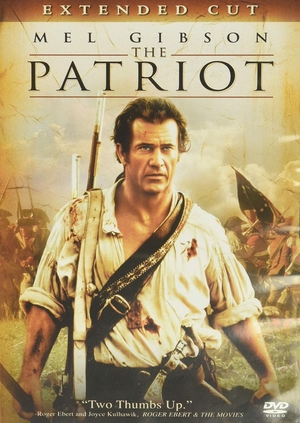 So then: We have a movie. It is written by Robert Rodat, who gave us Saving Private Ryan; and it is directed by Roland Emmerich, who gave us Independence Day and Godzilla. The hero is Mel Gibson, the villain is Jason Isaacs. The plot is the South Carolina chapter of the Revolutionary War.
The contested parts of the movie have to do with British conduct during the war, and with slavery. Question: Is it believable, let alone true, that British officers would incinerate an entire congregation of men, women, and children trapped in a church during Sunday services? Was the British attitude toward life indistinguishable from that of Nazi Germany and the Soviet Union?
David Horowitz, the distinguished author and bellicose critic of wanton anti-Americanism, weighed in heavily on the whole question on his important and lively frontpagemag.com website. He begins by reminding us that the extent of historical ignorance in America is, well, unbelievable. A recent survey of 55 leading colleges and universities reveals that 80 percent of seniors are virtually illiterate in the subject. They could not, for instance, identify Patrick Henry. (If Mr. Jacoby, when he resumes his column, reveals that Patrick Henry was the man who said "Give me liberty or give me death!" he should remember to cite his sources.)
Mr. Horowitz defends persuasively the conviction that the Revolutionary War brought on a crystallization of the ideals of the Founders. By no means complete-the abolition of slavery, the enfranchisement of women were years ahead-but to ignore the war's idealistic contribution to the idea of freedom and equality is greatly to disserve it, as also the sacrifices endured.
Granted that most men of the soil will fight to resist oppressors, whether Americans, Nazis, or Communists, wars can nevertheless be distinguished from the mere genus war when a strategic goal in sight is such as the goals of freedom and liberty enunciated in the Declaration of Independence.
That much being said, the movie itself, as distinguished from the movie's cause, is long, and soupy, the lines uttered, formulaic and unconvincing. One needs to forget that the same author wrote Private Ryan-the only alternative is to think that he was tortured, along with everybody else, to produce awful lines. But there are 160 minutes of the movie and they include an absolutely splendid villain (a British colonel), and battle scenes that vividly remind us what war was like, back when Patrick Henry was pleading for liberty, and offering his life in exchange.